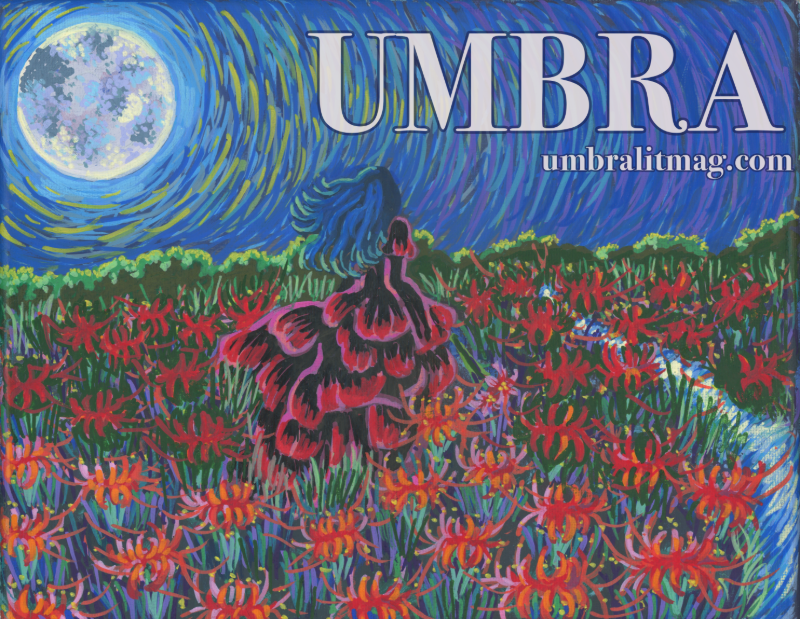

"Tell Stories Filled With Facts. Make People Touch and Taste and KNOW. Make People FEEL! FEEL! FEEL! FEEL!" - Octavia Butler

Each quoted passage below is from Octavia Butler's, Parable of the Sower.
~~~

The child in each of us

Knows paradise.

Paradise is home.

Home as it was.

Or home as it should have been.

Paradise is one's own place,

One's own people,

One's own world,

Knowing and known,

Perhaps even,

Loving and loved.

Yet every child

Is cast from paradise—

Into growth and new community,

Into vast, ongoing

Change.
Seattle was: my Nana and Papa being forty-five minutes away (an hour with mid afternoon traffic), Bisquick blueberry pancakes and the curdling coffee machine (dripping brown liquid from its nozzle), the Puyallup mall and back-to-school shopping at the base (always getting a new pack of multi color ballpoint pens), strangers running up and down Aliki beach at sunset, (watching couples walk behind them holding hands and smiling), nibbling on garlic naan from my favorite Indian shop then visiting the ice cream store below to get a scoop of ube ice cream in a crispy sweet waffle cone, an intense platonic love story between four girls (a love so deep than it carried from childhood to young adolescence), memories embedded deep in the mind to fall back on when it came down to the exploration and defining of identity, play dates on rocky beaches and peanut butter and jelly sandwiches on whole wheat bread lined with mixed seeds, rainy mornings and clear skies in the afternoon, extended family dinners on Sundays, birthdays parties at the ice skating rink (sipping on scolding hot cocoa and clinging to the sides of the rink, scared to fall onto the icy floor), cedar trees and snowy mountains, summers never past eighty degrees, cherry blossoms in the spring, crunchy leaves in the fall (jumping into tall piles across the street from the old brick complex with green shutters).
Seattle was home. Seattle was paradise. Cast from paradise I was flung into change.
~~~
Last night, when I escaped from the neighborhood, it was burning. The houses, the trees, the people: Burning. Smoke awoke me, and I shouted down the hall to Cory and the boys. I grabbed my clothes and emergency pack and followed Cory as she herded the boys out. The bell never rang. Our watchers must have been killed before they could reach it. Everything was chaos. People running, screaming, shooting.
My first summer in the south was unlike anything I’d ever experienced. The cicadas came out at night, like monsters of the dusk. They sang a frightening song, but I could never spot them with my eyes. The Louisiana sun of July shifted into August, and my skin deepened and darkened like caramel on the stove top. Every week my mom would buy a jar of crimson colored sticky jam, sold at the Sunday farmers market, made from fresh Ponchatoula strawberries. I’d spread the jam on whole wheat bread, and think of home. Magnolia trees stood tall and firm in the dry southern soil, wishing for a breeze like children wish for shooting stars (but neither ever came). Fading plastic metallic beads hung from empty branches, waiting to be cleared before the next carnival season. Peaches ripened in a day, and went bad in two. I grew accustomed to the reality of the ticking AC unit sticking out the side of my house, and pushing in icy air into the room that never seemed to cool. Denim shorts felt loose in the morning and suffocating in the evening. Tank tops became soaked with sweat in hours and sleeping with just the top sheet was my new normal. The city melted and I along with it.
I learned that Uptown and Downtown were two completely different areas, which felt like separate sides of one copper coin. Downtown was what most people considered New Orleans. And Uptown was where kids with lawyers and doctors as parents lived. Neighborhoods were wards, and levees kept the dark storm water out. Sunny days turned rainy in between blinks, and stray roosters screamed at the early morning sun. Gone were the harshly shaved chips of ice and overly processed syrups I knew, cherry orange and lime. Replaced with fluffy snow soaked in homemade flavoring covered in sticky condensed milk, the seasonal dessert was a new treat to me.
“Snowballs are not the same things as snowcones,” says every New Orleans native.
The local radio station plays zingy eccentric jazz, and the man at the corner of the block plays the same. The church bells struck every hour, and at every hour the audience of the park near my house shifted. From teenage boys passing a basketball back and forth to little girls jumping rope and singing rhymes. I see the black childhood I was denied in Seattle, and envy floods my heart.
I became curious. Curious about why no one stopped at the stop lights. Curious to why grown men would call me love when I’d never met them before, curious to why that wasn’t odd, curious to what I was doing here, curious to when I could go back home. Curious about Mardi Gras, about the season of cream cheese-filled cakes dusted with purple, green and gold sprinkles. I couldn’t understand the excitement of the festivals, and grew impatient for spring’s arrival to understand the buzz.
I didn’t fit in with the girls who looked like me, nor the ones who didn’t. Southern black was different from Northwest black. I pronounce words with an upright posture while girls here talk with a lean. They loved certain cultural dishes I had never heard the name of, and laughed when I asked questions about them. They visited their cousins on the weekends, while mine were miles away. I longed for the diversity of my old friends, where connection was already built.
Most days, I sat in my new room alone, staring at the boxes I’ve yet to unpack. Not ready to process or accept the reality that I have nothing left but memories to relive in my dreams. So, instead I sat on the floor and smelt the burning of my old life, as it dwindles in the flames of the past.
~~~
President William Turner Smith lost yesterday’s election. Christopher Charles Morpeth Donner is our new President – President Elect. So what are we in for? Donner has already said that as soon as possible after his inauguration next year, he’ll begin to dismantle that “wasteful, pointless, unnecessary” moon and Mars programs. Near space programs dealing with communications and experimentation will be privatized- sold off.
Also, Donner has a plan for putting people back to work. He hopes to get laws changed, suspend ‘overly restrictive’ minimum wage, environmental, and worker protection laws for those employers willing to take on homeless employees and provide them with training and adequate room and board.
What’s adequate, I wonder: a house or apartment? A room? A bed in a shared room? A barracks bed? Space on a floor? Space on the ground? And what about people with big families? Won’t they be seen as bad investments? Won’t it make much more sense for companies to hire single people, childless couples, or, at most, people with only one or two kids? I wonder.
And what about those suspended Laws? Will it be legal to poison, mutilate, or infect people – as long as you provide them with food, water, and space to die?
Dad decided not to vote for Donner after all. He didn’t vote for anyone. He said politicians turned his stomach.
I had never cared for the image of a white woman crying. What reason does she have to be crying? With her flexible job, that gives her the freedom to attend yoga classes in the morning and get home early enough to make her husband with brunette hair and freckles dinner. Or maybe order Chinese food because she’s feeling lazy, and had a long day. With her perfectly manicured hands always painted pearl white and her toes matching that same reflective shade. With her tailored skirts and kitten heels, and Warby Parker glasses. She has the soft features people write poetry about, and is terribly unaware of her privilege.
She lives in a world where people will never find her too loud, or too vulgar, or too rough around the edges. Prickly to the touch so it’s best to just leave her alone. She lives in a world choreographed to believe she is the image of beauty; her tears can mask the deceitfulness of her actions. Her tears bring her sympathy and attention, and she gets to bask in it, flopping around in its golden glow. And I know that I’m wrong to think this way and assume these things. I know that I’m no better than the men in red collared shirts in Target, who assume I’m stealing as I peer at the lip glosses in the makeup aisle. I know that this woman in my mind, isn’t completely accurate and is hyper specific type of “white woman”, but I can’t stop my heart from swelling with envy when I see a woman with pin curled blonde hair and crystal blue eyes complain about how pale she becomes in the winter and how she can’t afford Lana Del Rey concert tickets, to see her perform eleven songs that sound exactly the same.
But as I sit in an uncomfortable wired chair in my favorite coffee shop on St Claude, sipping on a bitter iced coffee in need over more vanilla, and taking tiny bites of a blueberry lemon loaf, I stare out the window and observe a white woman outside sobbing into her butter yellow cardigan. And for the first time in my life, I relate to her.
I’ve never been much of a political writer, or person. I admire the people who can perfectly articulate their frustrations and issues with America, as it is a running list that feels impossible to reach the end of. The people who can use metaphors and analogies to articulate their point in ways that always land with the general audience. Sometimes, I can’t tell if I can’t write about these topics, or if I’m just too afraid to. Afraid I’ll misspeak and my words will come out jumbled and confused, tossed around the page like word scrambles, which you’ll have to read and reread to find the root of what I’m trying to say. Afraid my words will fall short compared to some of the great writers like Audre Lorde, Toni Morrison, and Octavia Butler (my new found obsession). So as a result of this fear, I find myself turning to memory and color. Childhood and growth, love and fruit, dreams and interactions that poke me somewhere where it stings so I’ll remember the feeling.
I found myself feeling this same fear on the night of November 5th, 2024. When the decision sunk in, that the man who disregards women as living people with opinions and rights, and wishes to send us back to a time where girls’ innocence was stolen by strange men in the night and being beaten into submission, was considered ok. When as a woman there was no room for education or independence, where the right to expression didn’t exist. When I found out that that man held my future in his calloused destructive hands, I panicked. I suffocated my Mom with a billion questions,
What does this mean?
What happens now?
Nothing that drastic is going to change right?
How much power does he actually have?
Are we going to be okay?
But she had no answers for me, she just started across the room empty and defeated and shook her head. “Lord help us”.
Lord help us, is what I repeated to myself that night as I clicked on my blindingly bright phone screen, squinting in response to the iridescent blue light that was probably burning my eyes. I sat curled up in my white fluffy comforter, the fan in the corner of my room ticking as it pushed out cool air which tickled my nose, but nothing felt as cold as I felt inside. I watched countless videos of people crying, and clicked past more than a dozen rants of people expressing their frustration. Was it bad I knew she wasn’t going to win? I don’t think I even had faith. How does a black woman fight against a white man with broad shoulders and money? What reality was everyone else living it where this chance was even slightly even, slightly fair, slightly possible? Everywhere I went I saw anger, I saw lashing out and lips screwed up into knots. But I didn’t feel any of the anger, all I felt was fear. Fear lived deep inside my stomach at night like a parasite, and clutched at my gut warranting nausea. Fear that was cold and sharp and followed me like a shadow, haunted me like a ghost.
That’s all anybody can do right now. Live. Hold out. Survive. I don’t know whether good times are coming back again. But I know that won’t matter if we don’t survive these times.
Walking through the Bywater in the belly of New Orleans, I see this fear. In the Hispanic man painting a mural against the side of an old building, as he puts down his paint brush to observe his work. He wipes his brow with his sleeve and sighs. Once he moves out of the way I can clearly see the image of the newly painted flag of Guatemala. I see the fear in a young woman with boho braids and a future ahead of her. She looks me in my eyes, smiles, then hurriedly walks away. In the man wearing a long vibrant orange skirt and cropped shirt with bolded profanity marked across the front. He whirls past me on his skateboard while playing “Gypsy” by Fleetwood Mac on his speaker strung around his neck like armour. In the white woman with the butter yellow cardigan wailing into the sky, Lord help us.
~~~
I have to write. I don’t know what else to do. The others are asleep now, but it isn’t dark. I’m on watch because I couldn’t sleep if I tried. I’m jittery and crazed. I can’t cry. I want to get up and just run and run… Run away from everything. But there isn’t any way. I have to write. There’s nothing familiar left to me but the writing.
I write in Audubon park, surrounded by kissing couples and a man on neon green roller skates, smoking a joint, seasoning the air with the smell of weed and burning wood. The scent is familiar to me, I remember my uncles on my Grandma’s back porch laughing and reflecting, passing the joint between them. I ask my Grandma what is that smell? She tells me nothing you should be worrying about, and pushes me away from the back door. I note down the details around me (the sound of lips parting, the crunching of wheels rolling over dry leaves).
I write on Sunday mornings, just as the sun decides to show her face. I hustle out of my room onto the front porch. The day is still and I find her most beautiful like this. I write about this silence.
I write in the library, nestled between towers of books full of individual stories, made by individual people, living their own individual lives. People I’ll never know, and titles I’ll never remember the name of.
I write when I can’t process the feel of life. The sadness that follows my heart and simultaneously, the love. Sadness like the loss of my dog, Royal, who left me alone and helpless (some days I’ll dream of him, running back to me as if he never left. Sometimes those dreams are lucid). Sadness like saying goodbye to someone I love and knowing there will never be a see you later, no matter how many promises I make, they always turn up empty. And love; for cupcakes and fruit stands, my boyfriend and best friends. For just friends, who I’ll never be all that close to but will always love. For satsumas and giggles, Halloween in the Bywater and getting sick off of Skittles and Twix bars and regretting it all in the morning.
Besides the fact that all of these instances are connected by a notebook and an ink pen, the other circumstance that unites this practice is the fact that I’m utterly alone. Ridding myself of conversation and connection between people I give myself the space to be alone. To reflect and process, isolating the factors of life that need intention, and falling to their aid, using this practice as a release and coping mechanism, one I installed at a young age when everything around me felt suffocating (the relationship between my parents and I, watching my brother lose his ability to walk, the ache of being alone, the feeling of entrapment I felt being unable to express myself).
There is nothing familiar to me but writing. After I leave the Pacific Northwest and enter the blazing Louisiana heat (everything around me seeming to engulf into flames, burning until there’s nothing left but ash). There is nothing familiar to me but writing when my new room creaks at night, and my brother sleeps in the room next door, and I miss the comfort of hearing his breath at night, ensuring he is alive. There is nothing familiar to me but writing when everything I once knew is gone and isolation creeps up behind me like a ghost, haunting me. There is nothing familiar to me but writing.
~~~
At least three years ago, my father’s God stopped being my God. His church stopped being my church. And yet, today, because I’m a coward, I let myself be initiated into that church. I let my father baptize me in all three names of that God who isn’t mine anymore.
My God has another name.
~~~
The first church my Dad ever opened up was Jubilee. I’m not sure if a church is what you could even call it, as it was more less just a small flakey congregation of people who showed up to read over passages and pray. We would feast over sourdough, dipping it into bitter grape wine. My brother and I would grin at each other as we soaked our bread in the crimson juice. I’m so drunk we would say, mocking the tipsy strangers we saw downtown who turned into monsters at dusk. We slaughtered our walk and nearly tumbling into one another in the midst of our act. Stop that! Our Mom would swat at us, snapping us back into appropriate behavior. The church body consisted of a white couple, the man (whose name I cannot remember) wore Timbs and beanies. He was as typical as you could get for white guy from Seattle. He drank black coffee every day and played the acoustic guitar, loved books and wore gold framed wire glasses. His wife had a pixie cut and wore dainty gold earrings that glistened in the sunlight turning almost invisible by how light they were. She had a polite voice that was barely any louder than a whisper and a soft smile. We ate dinner at their house a few times, and the food was never very good (chicken, a spring salad, and elderberry juice), but we appreciated their hospitality.
There was a black woman whose name was Anu, but I called her Ms. Blueberry. Because at every gathering we held as a church outside of service, there she would be with a basket of blueberries like a fictional character in a children’s story. She was warm and sweet and I looked up to her as a black woman, who was uniquely herself. She had a gap between her two front teeth but she never seemed insecure about it. She wore her kinky afro hair in one large knot, and her lips were always natural. The only thing I ever saw her apply was Burt’s Bees chapstick in the shade pomegranate.
The rest of the congregation was made up of Indonesian and Filipino families, who had beautiful voices and cheerful laughs. I always felt welcome with them. On certain holidays (like Labor Day and the 4th of July) we’d venture up to their homes which overlooked the Pacific ocean. And there they would feed us various foods from their culture. Lumpia, panicit, adobo, singigang, halo halo, soto, satay, and cendol. All different dishes that had rich nutty flavors and were fattened with meats and cooked in various broths. Each dish was new and unique to me but then became standard as I formed a relationship with the different cultural ingredients. I also would try different snacks from their countries, like shrimp chips, which I never really liked the flavor of and avoided whenever the bag came around.
Every Sunday we met in an old theater in Beacon Hill, Seattle. As we sat in a circle facing one another, I never firmly connected to the words my Dad preached to the group, but I loved to sing along to the somber songs we sang. Rocking along to the beat booming out of the jimbabi drum my Mom banged into with her raw hands, and the acoustic guitar the man with the Timbs played. I didn’t notice my Dad’s slight discontentment with this community until I was older. I didn’t realize how sometimes he grew sad in response to how small the congregation appeared some days, and I never thought about how he must have felt seeing his dream not exactly live up to the expectations he set.
But I was grateful for Jubilee. Not for the teaching and the scriptures I memorized, but for the experience of diversity and perspective I formed. For the tastes and flavors I grew accustomed to, and the secondhand family I gained.
~~~
In 2018, my Dad got a job working as a Youth Pastor in Capitol Hill, at a church named Grace. Gone was the diversity of the group I once knew, and now I found myself surrounded in a sea of pale faces and rosy cheeks. Grace was different. It was a larger body, and they followed a more routine structure. There was a projector at the front of the room and rows upon rows of seats. They had a cello, guitar, piano, and drums to accompany the one singular singer (who sometimes invited someone else on stage to join him, but it was rare and always scheduled). During the time of communion the church would practice a ritual that felt oddly organized if not cultish. Each row would get up one by one, and file into a single line. You would follow the person in front of you till you get to the end of the room. Where the head pastor would bless you and watch you tear off a piece of bread and dip it in the red liquid. One cup for wine, one cup for grape juice. And the rest of the room would watch you do this, following the programming wired into all of our brains due to repetition. My brother and I could no longer pretend to be tipsy like the downtown monsters, not in front of a whole room of watchful eyes and pressed smiles. My Dad wanted us to fit in, my brother, sister, Mom, and I. He wanted us to grow relations with the families here and eat dinner at their houses. He wanted fellowship. And even though my Mom was battling a deepening sense of alienation, she supported him still. Like she promised to do at the altar.
But I longed for the homemadeness of Jubilee. The kids were different here. They all had phones and went to the same schools. They had friendship bracelets and memories to fall back on when conversation ran dry. They watched shows different from the ones my siblings and I watched, and liked different music (they couldn’t identify the beginning notes to Ex Factor by Lauryn Hill). But the one factor that out weighed them all, was that they were white. And for a black girl who grew up in a white city, I was no stranger to whiteness. I was used to standing out. I was used to getting braids so I wouldn’t look as strange, and I could avoid questions like Why is your hair so short? and Do you wash it? But still learning about Jesus Christ and growing a relationship with him in a room where no one seemed to notice me, and there was no one to relate to, was a lonely task. I felt trapped and in a reality I didn’t belong to. And so I stopped singing along to the songs in church, I stopped paying attention to the sermons and scriptures being read. I stopped following the messages, and I let myself disassociate and give up, turning my back on my Dad’s dream.
Embrace diversity. Unite— Or be divided, robbed, ruled, killed By those who see you as prey. Embrace diversity Or be destroyed.
On the corner of St Roch right across the street from the park you’ll find a yellow building and a white house next to it, taking over the whole corner of the block. Inside you’ll meet a variety of characters and people who will honestly change your life. They’ll invite you into the most beautiful and loving community, which stretches beyond religion. You’ll meet a man with brunette hair and an infectiously goofy personality, married to a woman with dirty blond hair and a dry sense of humor. You’ll wonder how they came to be, but you’ll understand how they work, they’re personalities reflecting off one another to create a simple harmony. They’ll have two sons both freakishly tall, and they’ll make fun of you with love, and invite you out to eat after every Sunday service (preferably to get wings).
There will be a woman with brown skin, who loves to experiment with her hair, not style but for practically and the art of change. She’ll be unapologetically herself, unafraid to dance in public and sing out songs. Even if she doesn’t fully know the lyrics, she’ll know the song. She’ll romanticize and love her solitude, but also enjoy conversation and meaningful connection. She’ll never turn you down on the opportunity to process and reflect over a cup of tea or a walk around City Park.
You’ll meet the kindest woman with the voice of a Disney princess (maybe Ariel or Rapunzel, definitely not Snow White). She’ll live in a little pale yellow house that always smells like honey and cinnamon. She’ll bake you banana muffins when you’re sad, and paint you birthday cards with watercolor paint, playing around with flowers and swirls, and you’ll pin them to your wall to keep forever. You’ll come to her with your heaviest burdens and lay them down before her, knowing she’ll gently pick them up and handle them with delicacy. She’ll be widely sweet and giving, and always be thinking of you. She’ll become your best friend.
You’ll meet a man with an afro that bounces when he walks. He’ll always make you feel seen and you’ll be able to have conversations with him for hours without realizing time is passing. He’ll encourage you without hesitation, he’ll take you up on every invitation, he’ll bring food to your house (a new recipe he tried) and be grateful for the company. He’ll be open about his struggles, giving you the space to be open back.
These people will become your family (along with the other 20 unique characters with vibrant and various personalities. Forming a cumulation of people, mimicking the spontaneity of a junk drawer). You’ll play volleyball with them at the UNO campus on summer evenings, swatting away the mosquitoes and playing in the sand under the setting southern sun. The Gap Band, Marivn Gaye, Lauryn Hill, Outkast, Andre 3000, Aaliyah, and many other musical artists’ songs will pump out from a boombox and everyone will sing along. You’ll spend every holiday together gathering at a different person’s house each time. Thanksgiving will be different though; Thanksgiving will always be held at the same home each year and everyone will gather there early in the afternoon, and stay until late evening. Everyone will bring a dish unique to their families and cultures, and together you’ll fellowship and laugh over memories and stories. These people will attend anything important to you and they’ll become the ground you stand on, when you feel groundless. They’ll love you fully and wholly, and demonstrate this love everyday.
~~~
I watch my Dad struggle to hang up Christmas lights across the whole perimeter of the church, and I call up to him from the ground where I hold the cord. Why are you doing this again? He responds by saying, I want people in the neighborhood to see how festive the church is. I want to be a light in the community, so people know they can come here. And I smile, I smile for a few days after that too. As he cooks meals for people in the neighborhood and hosts Christmas parties in the sanctuary, I smile. My heart swelling with pride as I realize my Dad finally accomplished his dream. It may not look like how he expected it too, and we may have had to move over two thousand miles away from the place his dream originated, but it was finally happening. This space and this home and this community that he longed for, was finally his own. Eventually, it became my own too.
Though I’m not sure how much the idea of Christianity fits me. It used to fold easily around my identity, but now it’s grown bumpy and misshapen. With horns and spikes, my identity pokes through the label of Christian. I don’t meet the exact qualifications of what it takes to be a pastor’s daughter. I don’t know many scriptures by heart, maybe not even any, just the first three verses of a psalm and the start to a couple prayers (Our Father who art in heaven…). My mind wanders during sermons, to conversations from the night before and my desire to buy new shoes and new cardigans for the fall. Preferably in a bright blue shade, as I always wear dark colors. I slip up and curse under my breath, and I constantly take the Lord’s name in vain. (Oh my God, I utter for the millionth time after I get another incorrect answer while doing my calculus homework.) But, I’ve been able to fall into this community more gracefully, and I find myself feeling less alone in the family I’ve grown here.
The two freakishly tall boys have become my best friends (more like brothers). They bring me food when I feel sick and knew to get me jarred pickles for my 17th birthday, instead of something generic and emotionless, like a gift card to Sephora (because to teenage boys, that’s all that girls like). I attend their basketball games and stare at the clock waiting for it to end, and afterwards we get pizza and ice cream. And on the way back we take turns playing songs in the car as they drop me off at home. The woman with the house who smells like honey and cinnamon comes to every open mic I read at, and always invites me on trips to Trader Joe’s. There, we peer at the new seasonal treats and baking mixes to try on a Friday night. I tell her everything I can’t tell my parents, and she locks away my secrets in a box close to her heart. The man with the afro teaches me to play tennis, a lifelong dream of mine. And when both of our schedules prove clear, we sneak into the Delgado campus to play on their court.
They’re reasonable in their beliefs, in their faults and confusion. They make me feel human as I question the man in the sky who I’m supposed to fully give myself too. They give me the room to wonder, what happens when we die? Heaven, this mystical place that lives above our heads built from clouds and sunlight, the day never ends above the atmosphere! Secrets cease to exist and every sin is watched from our bodies, till we’re drenched in nauseatingly sweet purity. Is this place real, and will I ever find it? They pray and cry in front of me, showing me all sides of their being. The beautiful and the more ugly bits fueled with sadness and rage. They’re human, and I love them for it.
Spirituality has become a fluid term for me. It finds me pink and colors me blue with curiosity. I make the conscious choice to believe someone (or something) wakes me up every morning and my existence on this dying rock wasn’t an accident. I look to the birds for signs and watch the clouds to direct me on which way to walk and what words to say. I accept the unfamiliar and continue to investigate the topic of religion, allowing Christianity to be a guide in my research. A format I can choose to pull or not from.
But I turn to gratitude. Grateful that even though I have my doubts and fears, I’ve had the pleasure to watch people praise and celebrate life, given to them by someone they pronounce as king. Grateful that through religion I’ve found myself belonging to many different groups broadening my perspective through each memory I’ve formed, and now cherish. For the meals I’ve shared over conversation and questions. For the love I’ve witnessed grow deeper between my parents as they continue to support each other through shifting seasons and change. For the friendships and family I’ve found. And for growing up in the structure of religion, having it as something to practice and turn back to during uncertainty. Grateful for the future, for all it brings. For the decision to explore and play with spiritually until I land on a title or concept or belief that suits me. Perfectly working alongside the scope of my identity.
I find myself thinking back to my parents’ relationship, to their story and the love they share for one another. How that love and determination and complicated art of never giving up, grew into a beautiful community and a family that through the hiccups of life, remains intact. I respect the fact that their relationship flourished through God, and I use their story as a reminder of a particular route of life, and honor their decision to love through religion. For now, they have a son who lives alone, and despite his health struggles, works for himself while studying culinary arts. Living a life they prayed over and wished for him, whom they’re deeply proud of and tell him every day. And two daughters, one who loves to push herself against the challenges of life and strives to be happy no matter what that may look like for herself, and one who enjoys her small circle of friends and family, enjoys modern dance, and the process of making oatmeal raisin cookies. They live in a home gifted to them by family friends that creaks at night and has old kitchen appliances, but plenty of room for all their hobbies and for loved ones to stay. They’re approaching twenty two years of age and their relationship is still pleasantly sweet. My Dad still tells the story of how they first met to every new stranger, proud of the fact that he “got the girl” and my Mom still rolls her eyes and laughs. They’ve grown a lot as people. My Mom enjoys going out at night with her elderly friends to Caribbean clubs, coming home at twelve in the morning, while my Dad stays up waiting for her, reading a comic book from 1960 in bed. My Mom has opened up to the fact that she’s slowly shifted out of the singularity of Christianity, and tells me about all the different things she believes in today, and my Dad respects her beliefs and asks questions while remaining solid in Christianity. And they love, they love each other without fail and they will continue to till they become finite.
~~~
I first read Parable of the Sower on my move to New Orleans, in the backseat smushed between suitcases and cardboard boxes, rattling against the car windows as our black mini van rolled over bumps in the road. Open valleys and fields of tulips whipping by. My older brother yelling at my younger sister to roll up her window, my parents arguing about which exit to take and my dog barking in his kennel, while I sat in the back trying to tune out their words with the words of Octavia Butler. I loved the book, I got lost in the excitement of sci-fi and afrofuturism, fire and heat (heat I felt pressing down on me at the time). I didn’t meditate long on the parallels between Lauren, the main character, and myself. I quickly finished the book before my first day of high school, and shoved it under my bed for years. Only loosely recalling it whenever anyone asked me about a book I liked, “I really like Parable of the Sower, I read it while I was moving here.”
Rereading a few years later, after turning 17, is when my mind awakened to the similarities between Lauren and I’s life, I quickly realized I had an undiscovered friendship and relation with her. A writer, a pastor’s daughter, a leader, a black girl lost and uprooted, a friend, a dreamer, and an obsessive. She felt like me. And I found myself embarrassed that I had yet to discover this connection before. Embarrassed that I had let this book that so closely resonated with me and my current journey, rot under my mattress, between old journals and various pieces of memorabilia for years.
Finding relation within media and artistic representation feeds the souls of humans. It allows us to feel seen, and is used as an easy way to build connections between people. Conversation easily sparks between two strangers when they’re both wearing a Vampire Diaries t-shirt.
“I love that show!”
“Oh my god, me too! Are you team Damon or Stefan?”
We like to cling to things that express ourselves and validate our emotions and life choices, in a way we can’t do alone.
After reading the book for a third time I find myself highlighting bits and pieces from the text, and holding the book close to my chest. My eyes burning from the feeling of being recognized. I scribble between paragraphs and leave notes about the parts I relate too. I recommended the book to a friend, or someone more than friend, and hand them my copy.
“Let me know what you think about it!”
I use quotes and weave them into an essay, I phrase and rephrase, I read and re read, over and over again.
I can’t wait to see how this book continues to carry with me, if it’ll continue to grow and morph, finding new meaning for me as I shift into new stages of life, or if I’ll wake up one day and realize I’m done with this story. And it no longer serves me. Leaving in on one of my many future book shelves where it will stay until eventually I give it to someone new. Where it’ll go through a similar cycle, of being read, being forgotten, being remembered, and being loved.
“You don’t know that! You can’t read the future. No one can.”
“You can,” I said, “if you want to. It’s scary but once you get past the fear, it’s easy.”
After four years of change there’s a question of the future, as well as a sense of thankfulness towards both cities. Thankful for the shaping of perspective, produced from the roughness and realities of life in New Orleans. A place that isn’t perfectly manufactured and suburban like Seattle. For the friendships I gained, and the ones I left behind that continue to grow even with the distance between us; despite the fears I felt when I left Seattle, that these friendships will fail and fall to the bottom of my memories like crystal stones. For the heat that healed my cracked skin, and humidity that fed my 4C coils, and the family and community that fostered me into adulthood. For the memories and connection, and roots that grew in Seattle that I can revisit during uncertainty. And the feeling of home.
But now I have to think of what’s next? What community will I find and what love will find me? In my dreams, I always find myself returning to my future, and I’ve made up my mind that it’ll be fabulous. Fabulous not in the sense where I’ll wear glossy new shoes and trade the fraying skirts I bought from the thrift store on Jefferson Highway in exchange for sixty dollar ones from a boutique on Magazine. Not fabulous in the sense where I live in a brownstone in New York, with a washer and dryer inside the building, and a sweeping view of the overpopulated, overgrown city. Full of love and hatred, chaos and solitude. Not fabulous in the sense where I’ll rake in money like seasonal autumn leaves, spending it on trips across the world and back, purchasing trinkets at every small local shop I happen to pop into. Peering over various silk and cotton slips to sleep in, buying one that’s pearl blue and shimmers in the dark.
Fabulous in the sense where I’ll be content. Where I’ll wake up in an apartment that ticks and squeaks at night, but the bread in my fridge will be homemade. The gas stove will need to be lit with a match, and the red tea kettle that’ll sit on top of it will be chipped, but the tea I’ll drink will be from the marketplace in Seattle I grew up visiting, where I’d watch my Mom browse over blends and honeys. My windowsill may be fractured, and all of the wooden chairs surrounding my folding table will be wobbly (one will be held together with duct tape losing its stick) but I will have picked out my furniture myself.
Fabulous in the sense where I’ll write various poems about life for no one in particular to read, but I’ll publish them anyway, and they’ll be bound together in a slim book with a simple title. And I’ll sniff the pages because I love the smell of paper. I’ll write thirty minute screenplays and imagine the famous celebrities who would play my characters. I’ll write stories about my childhood best friends, and our time spent playing in the Pacific Northwest sand. About New Orleans and the south, and all it’s taught me. About my fear of being forgotten and left. About my experience being a black woman, and how long I spent longing to fit in, just to realize maybe I’m not meant to.
I will host dinner parties in my cramped apartment and serve food on my thrifted plates and cloth napkins. We’ll eat penne pasta, and I’ll bake all my favorite recipes bubbling over the simple fact that I’m making other people happy. Over the fact that I’m making people feel. This home that I’m creating will become a castle of my own imagination (paradise), and it’ll be fabulous, because it’ll be mine. And there I will be a princess.

